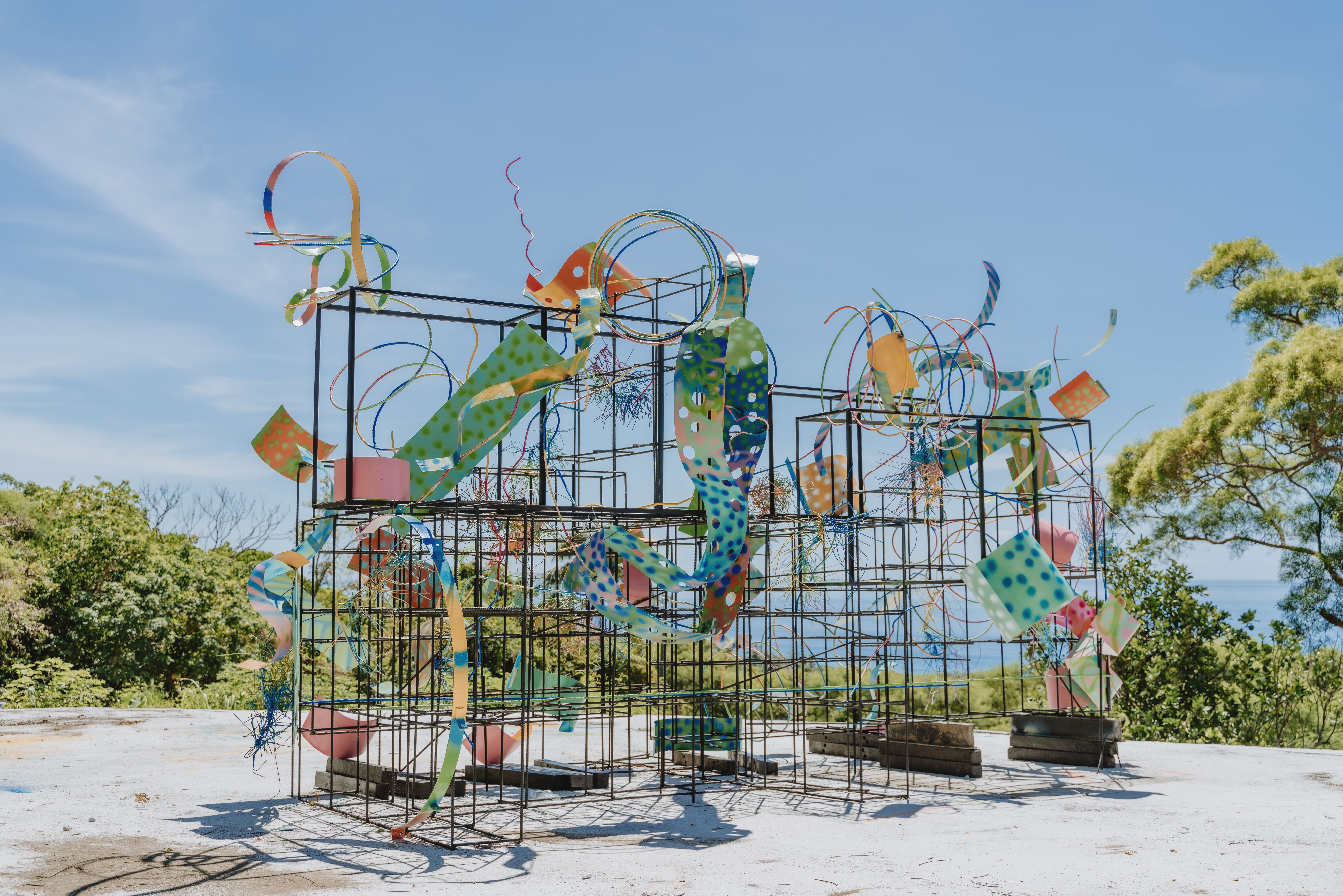
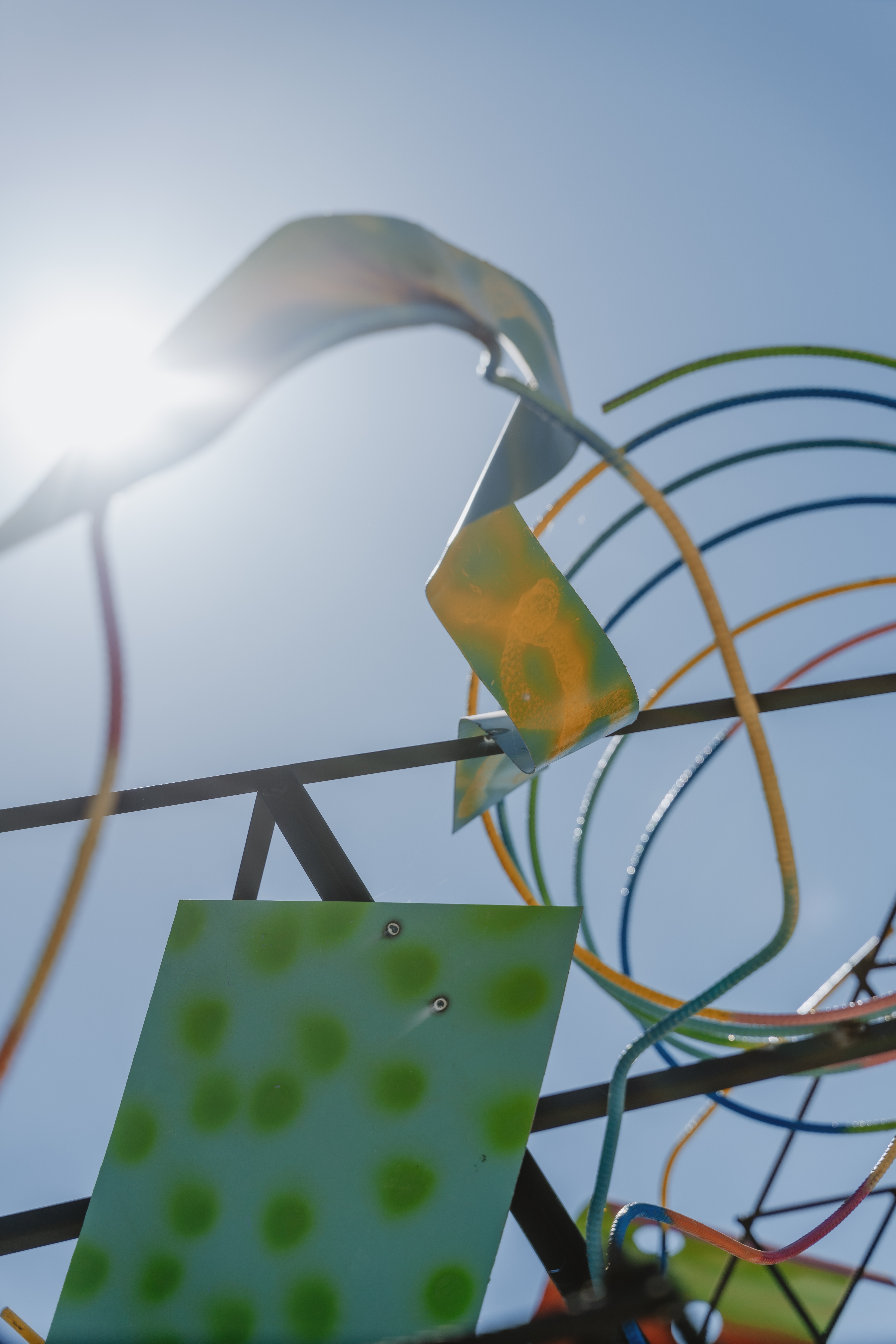
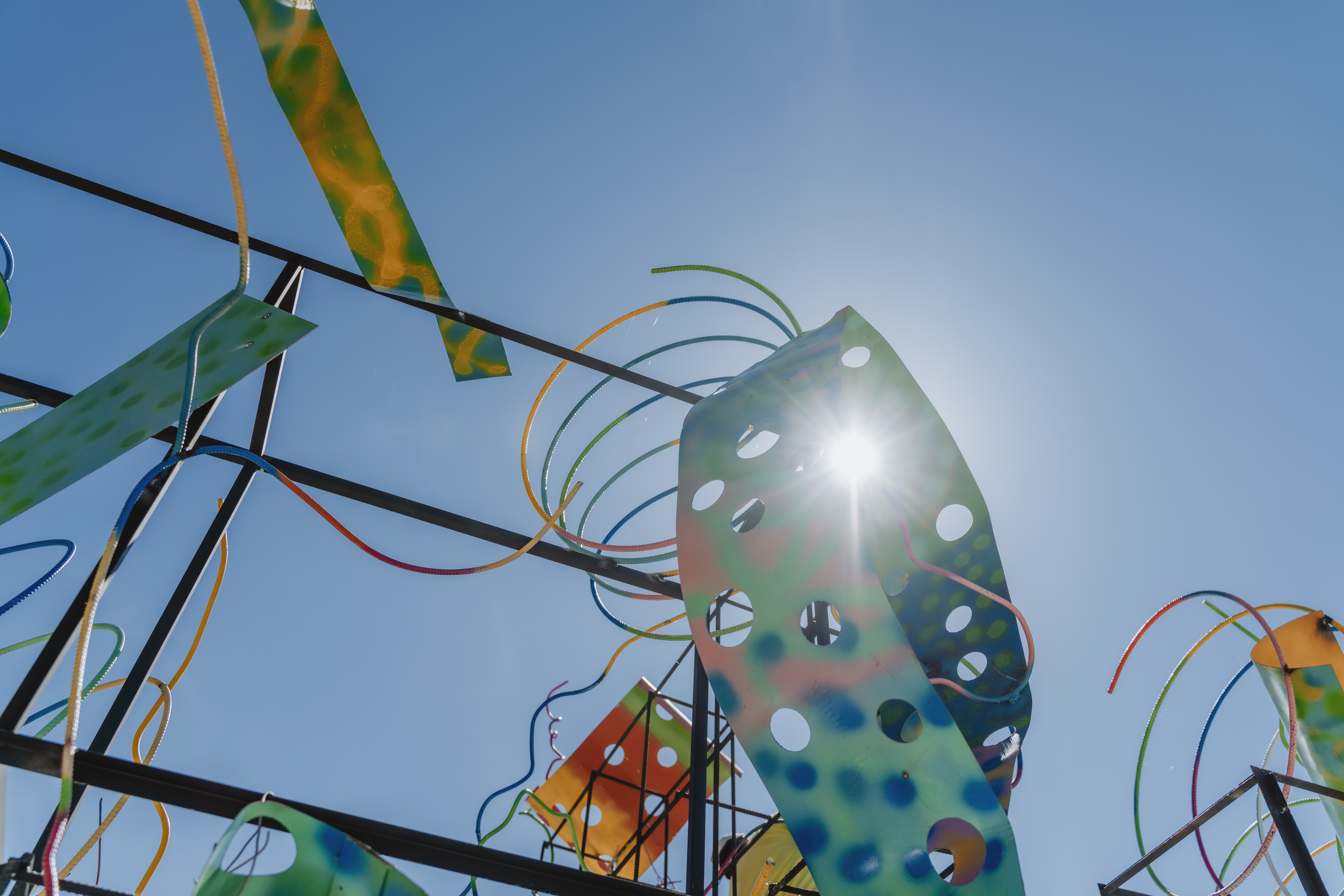
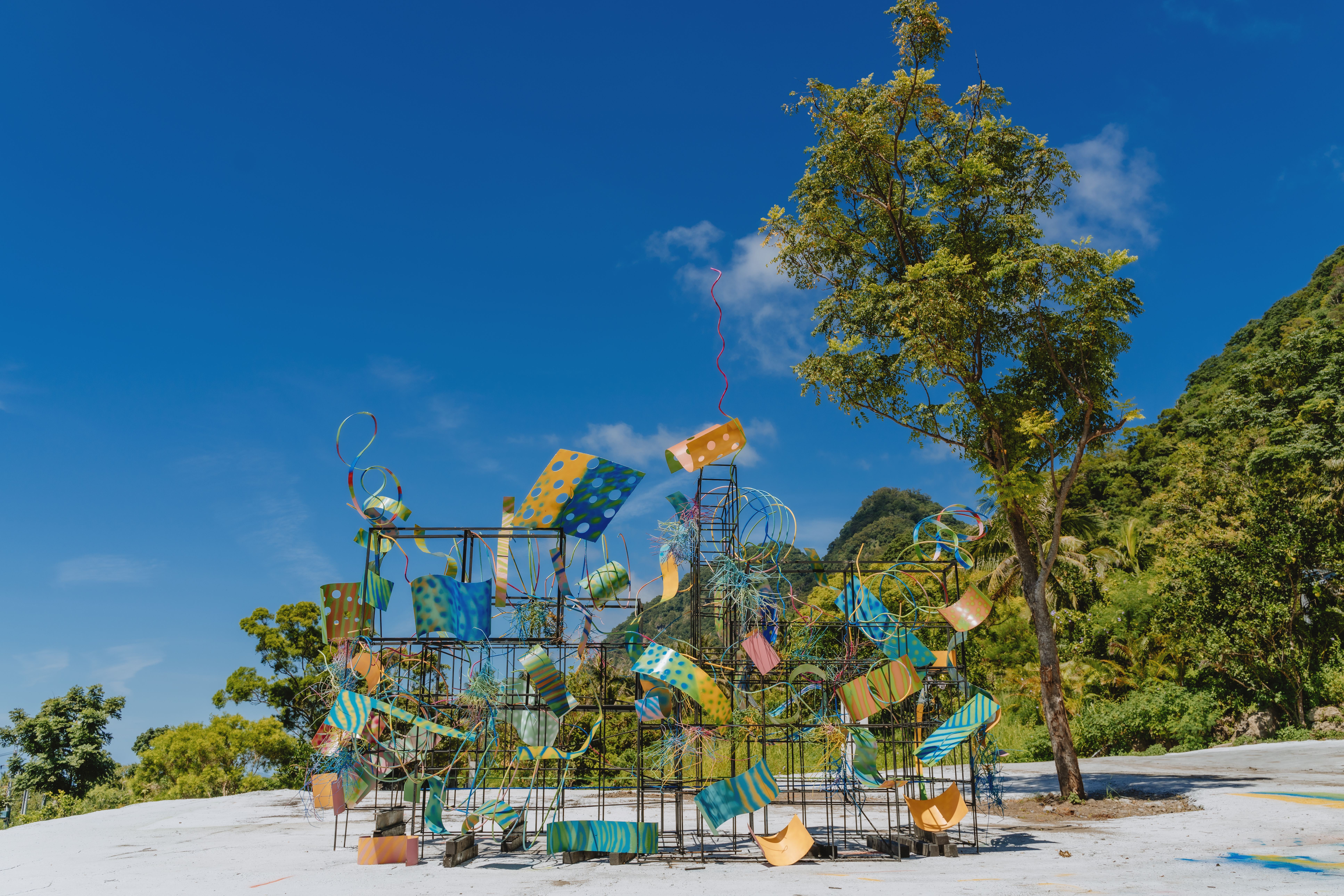
Paul Chiang has long been fascinated by three-dimensional space, with his works often exhibiting a tendency to break free from conventional boundaries and extend in all directions. While he favored minimalist styles in his youth, he always aspired to transcend the limitations of painting. In "Untitled 75-02," he experimented by adding texture and small extensions to the minimalist composition, attempting to find a human connection within simplicity.
In 2006, commissioned by the Ministry of Transportation to design a three-dimensional stained glass piece titled "Light of Life" for their new building, Chiang began to explore spatial dimensions in his work. He later showcased his first architecture-related piece at the Museum of Contemporary Art, Taipei, in the joint exhibition "Membrane onto Magic." In 2007, with sponsorship from the Taishin Bank Foundation for Arts and Culture, Chiang held his solo exhibition "A Journey Into Dimension and Space," where he debuted his steel sculptures. Despite the hardness of the material, these sculptures retained Chiang's signature fluidity and warmth.
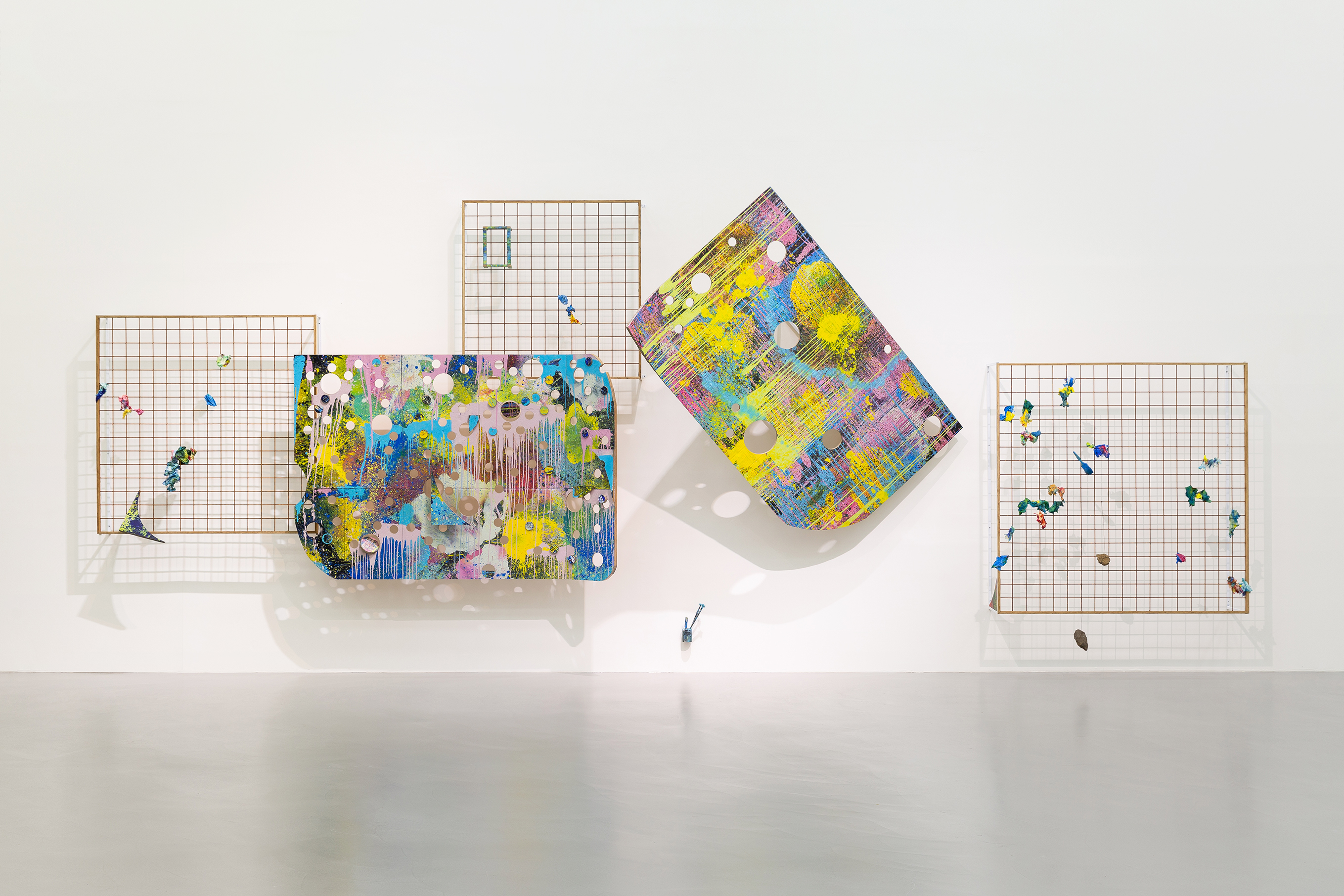
Around 2020, with the construction of the Paul Chiang Art Center, he boldly ventured into using new materials to express his artistic vision. Materials such as painted paper, paint cans, construction site debris like iron wires, corrugated sheets, and black templates provided him with endless creative inspiration. These works demonstrate the variations and artistic freedom in expression in Chiang's works.
Glass Works
Chiang enjoys experimenting with new media. In 2006, for his piece "Light of Life," he visited a factory three times a week, meticulously crafting the color and imagery of each stained glass piece by hand. The final artwork incorporated over fifty pieces of stained glass, created by cutting and pulling glass threads. Leveraging the translucency of glass, he installed internal lighting, creating an abstract, mysterious, and ever-changing spatial experience.
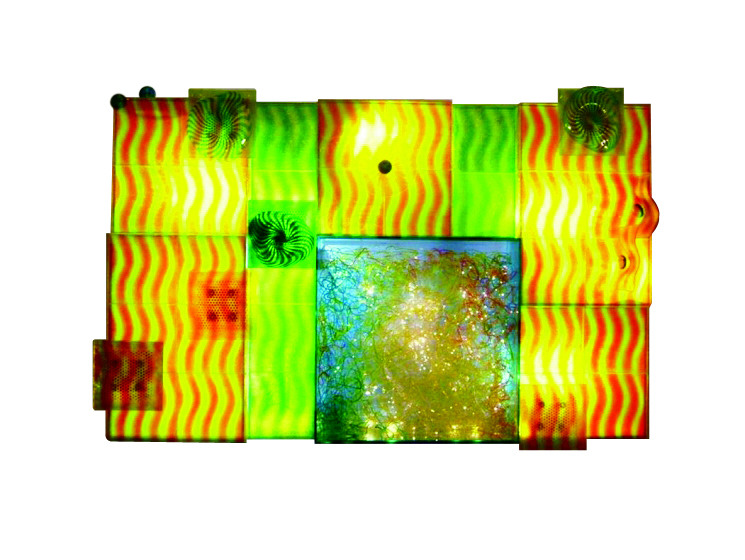
Supported by Por-Shih Lin, Chairman of Taiwan Glass, and his wife Li-Ling Hsu, Chiang created his first three-dimensional work for the "Magic of Membrane" exhibition at the Museum of Contemporary Art, Taipei, in 2006. Using two square meters of glass, he crafted a cube composed of multiple layers of laminated glass. Inside, LED lights were installed, with each side of the glass displaying different colors, transitioning from the brightest to the darkest hues. This piece became the visual focal point of the outdoor exhibition.
Steel Sculptures
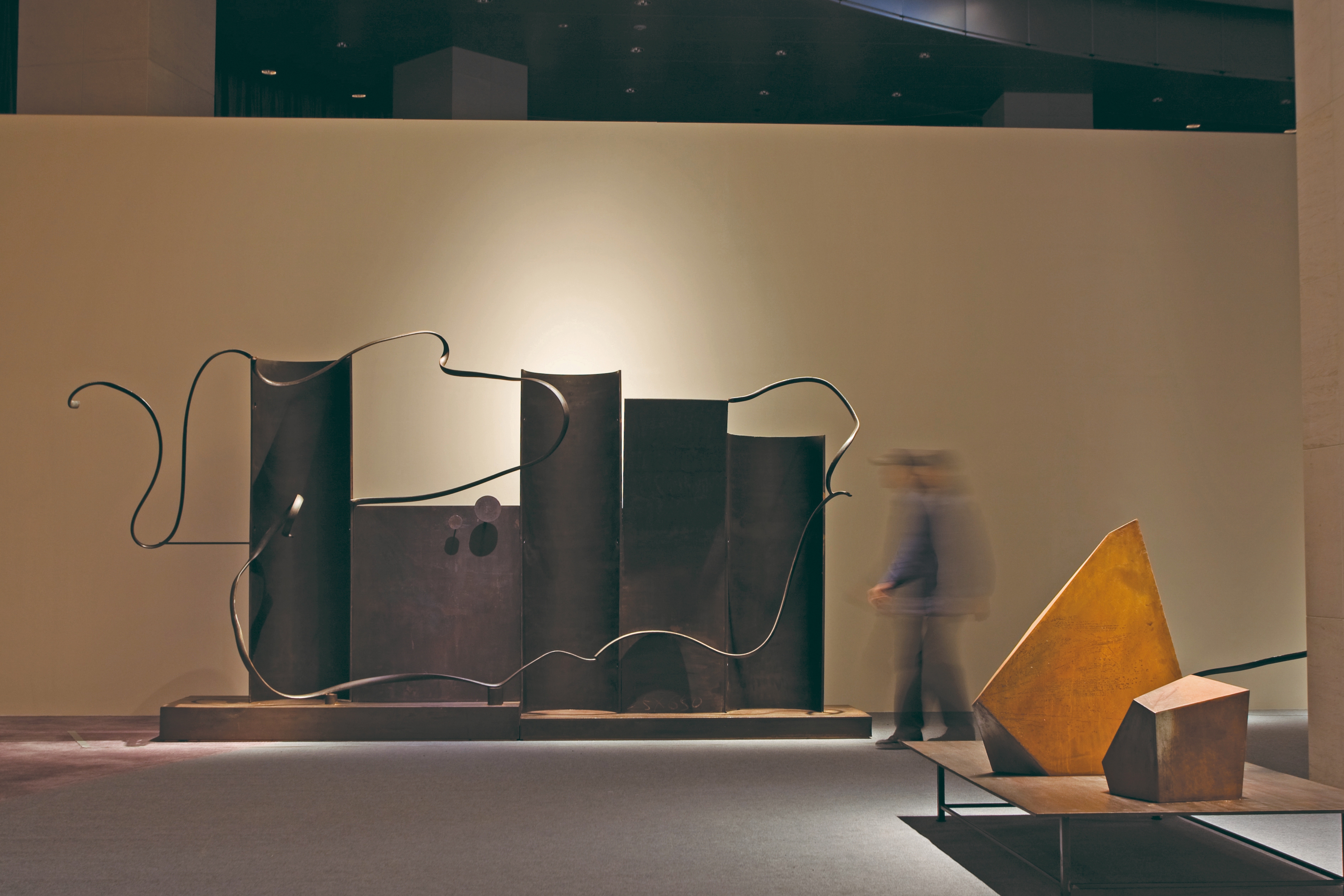
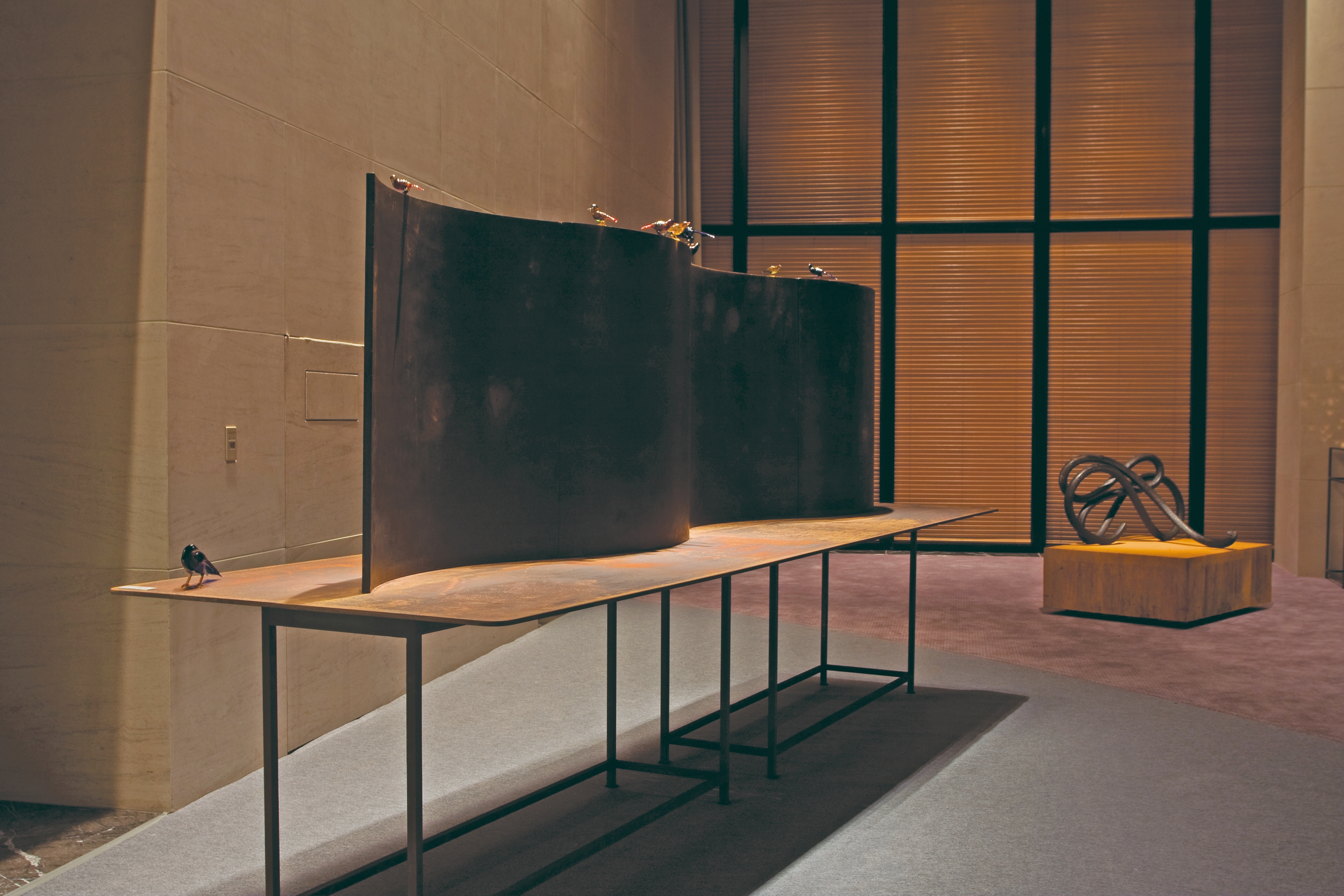
Three-dimensional works have always been a new frontier that Chiang wanted to explore. In 2007, with the generous support of Ms. Shuchao Wang-Hou, founder of Spring Gallery, Chiang utilized steel materials sponsored by her husband, Mr. Chen Hsiung Hou, Chairman of Tung Ho Steel Enterprise Corp., to create pieces including "Romantic Era" and "Hometown." These works were exhibited at the Taishin Bank Foundation for Arts and Culture's solo exhibition "A Journey Into Dimension and Space.”
"Jinzun / Poetic" and "Henry"
Chiang once said, "I want to turn everything I see into art." For him, creativity extends beyond the confines of canvas and traditional materials. In recent years, with the construction of his Art Center, Chiang has been collecting discarded construction materials like iron wires, black templates, and corrugated sheets, as well as tools and paint cans, and even used tissues stained with paint from old studio. These items have become his creative materials, showcasing his artistic freedom through diverse media. In the past, his art transformed inward emotions onto the canvas. Now, he takes it a step further by incorporating physical materials from his surroundings. These construction materials, whether heavy or light, embodied the spirituality he seeks to convey.
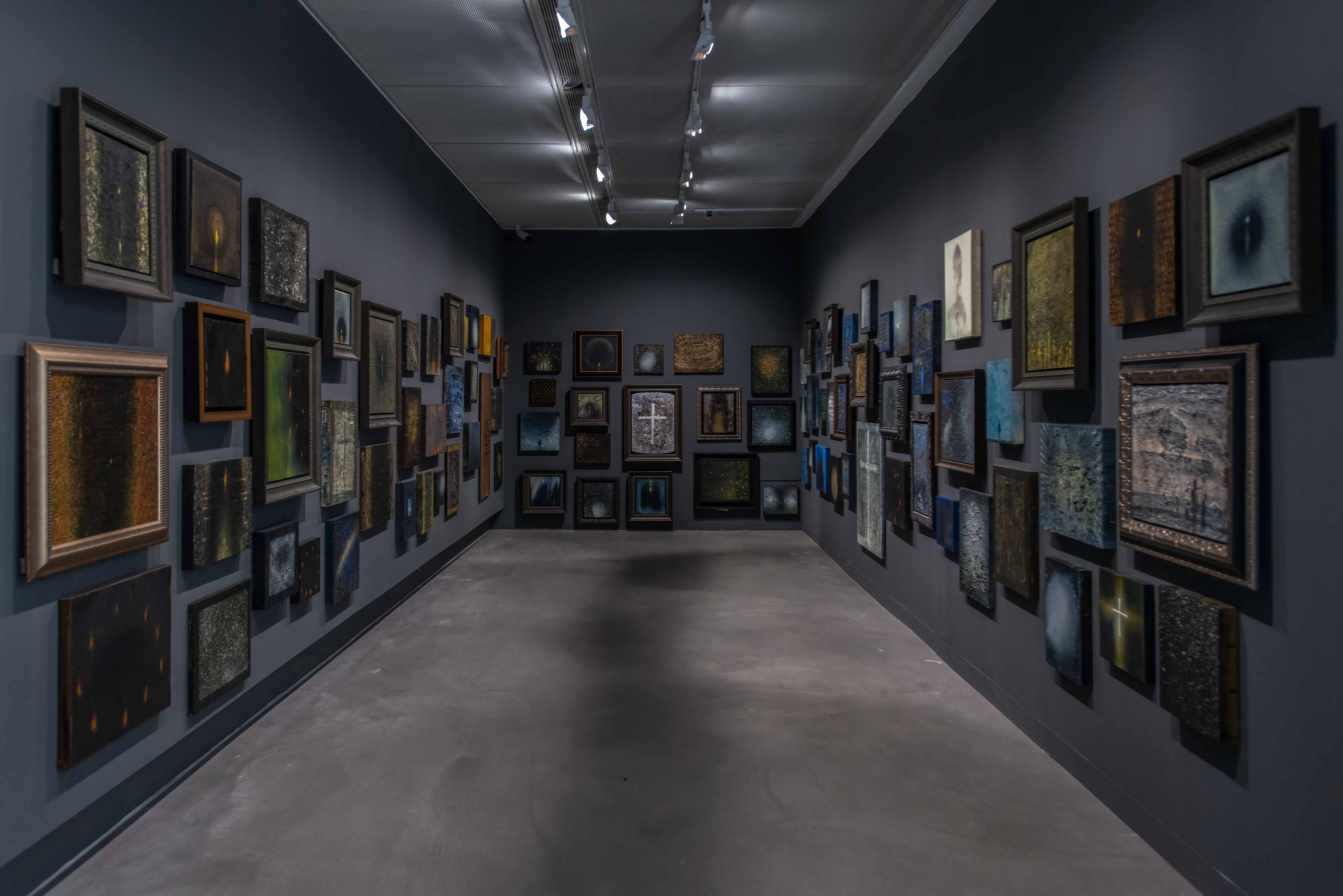
Meditation Space (Small Paintings Collected Over the Years)
The Meditation Space is a reflection of Chiang's artistic journey, much like a personal diary. Dim lighting, combined with the dark tones of candles and crosses in the paintings, creates a meditative atmosphere. While the arrangement of these works varies across different exhibition venues, they consistently evoke a sense of time gently flowing, with tranquility and hope.
Chiang's paintings often feature religious symbols such as crosses and candles, not out of religious conviction but as pure artistic elements. "I often think that only pure light can comfort human frailty. I hope the spirituality in my works transcends the physical boundaries of the canvas, offering people a sense of sublimation and enlightenment," he explains.